A strong commercial cleaning scope of work should do more than list a few standard tasks. It should define what gets cleaned, how often it gets cleaned, who is responsible, and how quality will be maintained over time. For businesses in Temple, Belton, Waco, Round Rock, and Georgetown, that matters because no two facilities operate the same way. A professional office has different needs than a medical space, a church, or a high-traffic commercial building. Centex Office Pros builds cleaning programs around defined standards, documented expectations, ongoing oversight, and facility-specific needs rather than generic, one-size-fits-all service.
If you are reviewing proposals or trying to improve your current service, the real question is not whether your building is getting cleaned. It is whether the scope is clear enough to produce consistent results. A vague janitorial scope of work often leads to missed tasks, inconsistent crews, and “looks clean at first glance” service that does not hold up where it counts. A custom plan gives you clearer expectations, better accountability, and a cleaner facility that stays that way.
Why a Clear Cleaning Scope Matters
Many commercial cleaning problems begin before the first visit ever happens.
A business owner or facility manager asks for a quote. A cleaning company sends back a general proposal. It includes familiar language like restroom cleaning, trash removal, vacuuming, and mopping. On paper, that sounds fine. In practice, it leaves too much open to interpretation.
How often are restrooms checked? Which touchpoints are included? What happens in high-traffic entryways during wet weather? Are consumables restocked? Is floor care light maintenance only, or does it include periodic deep service? Who performs quality checks? What happens when needs change?
When those questions are not answered in the scope, service becomes reactive. Instead of working from a plan, everyone waits for complaints.
Centex Office Pros positions its service differently. The company emphasizes clear scope, defined cleaning standards, documented checklists, consistent crews, and routine quality checks designed to keep standards from slipping over time. That approach matters for facilities across Central Texas because traffic patterns, building use, and operational demands vary widely from one property to the next.
What a Custom Commercial Cleaning Scope of Work Should Include
A custom scope should reflect how your building actually operates, not just what a generic checklist says should happen. Here are the core elements every facility should expect.
| Scope component | What it should define |
|---|---|
| Facility profile and use case | Facility type, square footage, occupancy level, business hours, high-traffic areas, security or access requirements, and any special-use spaces — plus how people actually move through the building. |
| Service frequency and cadence | Daily tasks, multiple-times-per-week tasks, weekly, monthly, and periodic deep-clean or rotational work — assigned to maintain a defined level of clean rather than because a frequency sounds standard. |
| Task lists by area | Specific, measurable tasks per area rather than broad language like “clean the office.” |
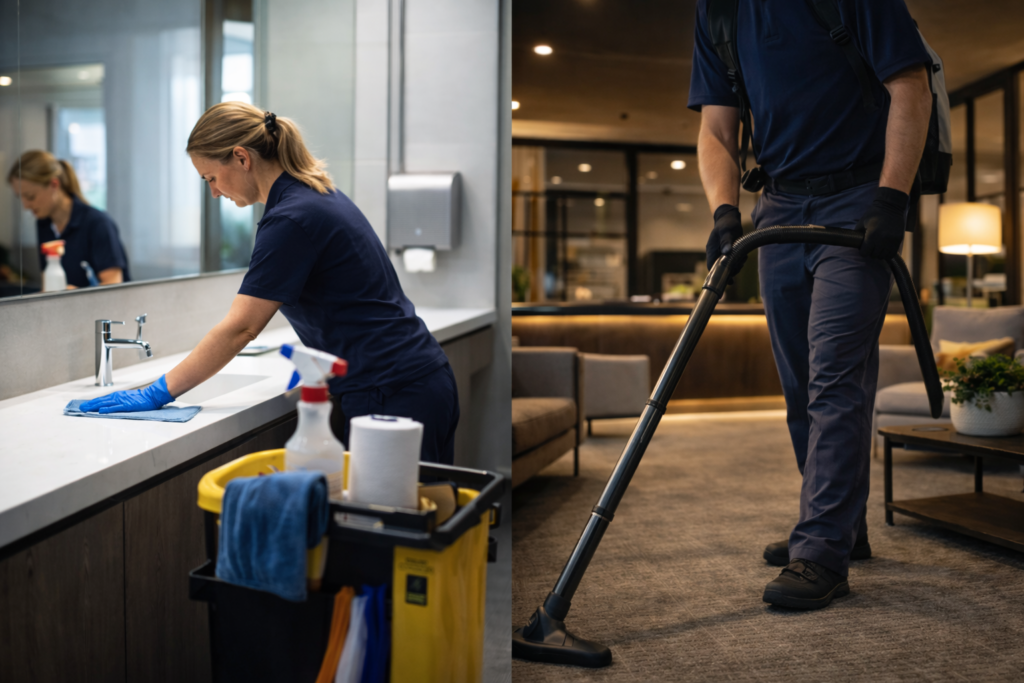
| Restrooms, breakrooms and touchpoints | Restroom sanitation standards, fixture disinfection, partition and surface wipe-downs, floor cleaning, odor control, supply restocking, trash and liner replacement, breakroom counters, sinks, tables and appliance exteriors, and high-touch disinfection of handles, switches and shared surfaces. |
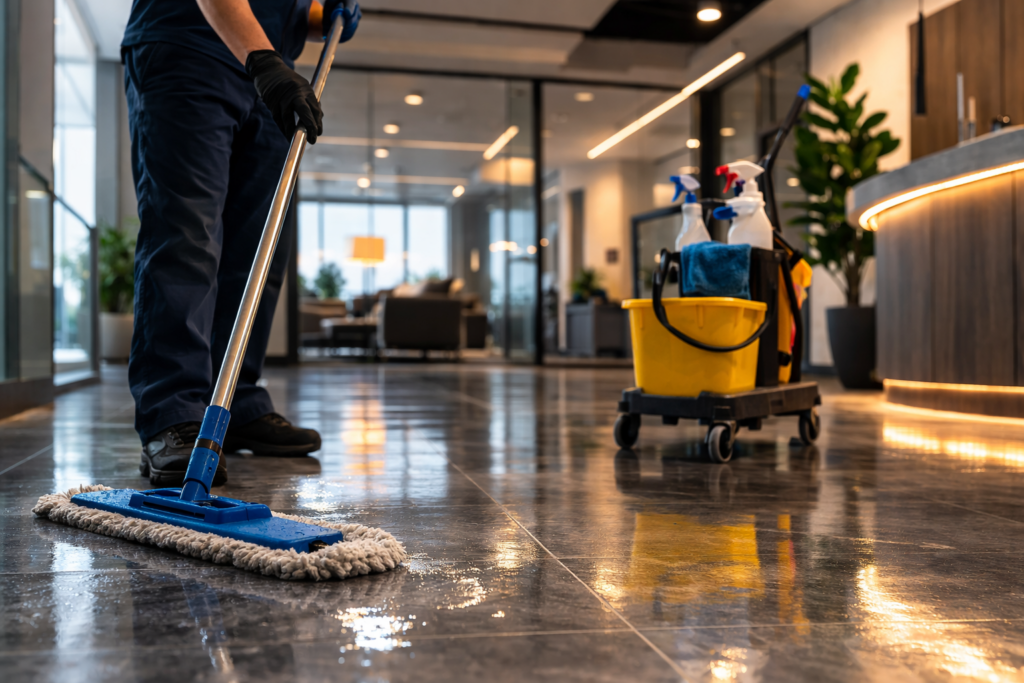
| Floor care | Hard floor surfaces vs. carpeted areas, daily maintenance, spot treatment expectations, entryway attention during wet weather, periodic machine scrubbing, burnishing or buffing, carpet spot cleaning, and deeper scheduled floor care. |
| Supplies and restocking | Who restocks soap, paper towels and tissue; whether supplies are included or owner-provided; how low inventory is reported; whether liners and consumables are checked each visit; and what happens when an item runs out between visits. |
| Staffing, access and security | Who will be in the building, whether crews are background checked and insured, who supervises, what access procedures apply, whether service is after-hours or daytime, how alarm and lockup issues are handled, and whether the same crew returns consistently. |
| Quality control and oversight | Inspection frequency, supervisor involvement, checklist use, issue reporting, the communication process, response time for service concerns, and how standards are held over time. |
1. Facility Profile and Use Case
Every scope should begin with the basics of the building itself.
That includes:
- facility type
- square footage
- occupancy level
- business hours
- high-traffic areas
- security or access requirements
- special-use spaces
A medical office in Temple may need stronger attention to touchpoints, waiting rooms, and exam-related traffic flow. A church in Belton may need cleaning built around weekend services and event turnover. A professional office in Georgetown may need dependable after-hours service that keeps workspaces presentable without interrupting the day.
A cleaning provider should understand not just the building, but how people move through it.
2. Service Frequency and Cleaning Cadence
One of the biggest weaknesses in a generic commercial cleaning contract is the absence of a true cleaning cadence.
A good scope should define:
- daily tasks
- multiple-times-per-week tasks
- weekly tasks
- monthly tasks
- periodic deep-clean or rotational tasks
For example, restroom touchpoints and trash removal might need daily or even multiple daily checks in some facilities. Baseboards, vents, and detail dusting may be weekly or monthly. Floor buffing or carpet extraction may be scheduled separately as periodic maintenance.
Centex Office Pros specifically describes its process as establishing the right cadence after assessing the facility’s current condition, traffic patterns, and cleaning challenges. That is the right model. A building should not be assigned a frequency just because it sounds standard. It should be assigned a frequency that maintains a defined level of clean.
3. Detailed Task Lists by Area
A true facility cleaning checklist should be broken down by space, not just broad categories.
That usually includes:
- restrooms
- break rooms
- private offices
- conference rooms
- lobbies and reception areas
- hallways
- entrances and glass
- shared workspaces
- floors and carpets
- trash collection points
Area-based task lists reduce confusion. Instead of saying “clean restroom,” the scope should define what that means. Does it include disinfecting fixtures, spot-cleaning partitions, restocking soap and paper products, emptying trash, polishing mirrors, cleaning floors, and checking odors? The more specific the scope, the less room there is for inconsistency.
This is especially important in multi-use commercial spaces in Waco or Round Rock, where a lobby may need a different level of attention than private offices in the same building.
Restrooms, Breakrooms, and Touchpoints Need Special Attention
Some areas create more complaints than others, and for good reason. Restrooms and breakrooms shape how people judge the overall cleanliness of a facility.
A strong scope should clearly define:
- restroom sanitation standards
- fixture disinfection
- partition and surface wipe-downs
- floor cleaning expectations
- odor control measures
- supply restocking
- trash and liner replacement
- breakroom counters, sinks, tables, and appliance exteriors
- high-touch disinfection for handles, switches, and shared surfaces
Centex Office Pros calls out restroom sanitation and restocking, touchpoint disinfecting, and defined checklists focused on high-contact surfaces as part of its process. That reflects what many facility managers already know: if these zones are neglected, the whole building feels neglected.
Floors Should Have Their Own Defined Plan
Floor care is one of the easiest areas to under-scope.
A proposal may say “vacuum and mop floors,” but that alone is not enough. Different floor surfaces need different treatment, and high-traffic zones often require more frequent or more detailed care than the rest of the building.
A custom scope should identify:
- hard floor surfaces vs carpeted areas
- daily maintenance tasks
- spot treatment expectations
- entryway attention during wet weather
- periodic machine scrubbing, burnishing, or buffing if needed
- carpet spot cleaning
- deeper scheduled floor care
Centex Office Pros notes high-traffic floor and carpet care as part of its janitorial services and emphasizes that floors reveal whether cleaning is real or just surface-level. That is a smart perspective. In busy commercial environments, floors often show wear and neglect faster than almost anything else.
Supplies and Restocking Responsibilities Should Be Clear
A surprising number of cleaning issues come down to one basic problem: nobody clearly defined who handles supplies.
Your scope should answer:
- who restocks soap, paper towels, and tissue
- whether supplies are included or owner-provided
- how low-inventory issues are reported
- whether liners and consumables are monitored during each visit
- what happens when an item runs out between scheduled visits
This matters even more in higher-traffic buildings. A spotless restroom still feels poorly managed if dispensers are empty by midday. A breakroom looks neglected when trash liners overflow or paper towels are gone before the next visit.
If your facility in Temple or Belton has fluctuating occupancy or event-based traffic, restocking expectations should be written into the scope rather than handled informally.
Staffing, Access, and Security Protocols
A custom cleaning plan should never treat staffing as an afterthought.
A business owner should know:
- who will be in the building
- whether crews are background checked
- whether the company is insured
- who supervises the work
- what access procedures are followed
- whether service is after-hours, daytime, or both
- how alarm, lockup, and entry issues are handled
Centex Office Pros emphasizes that its teams are background checked, insured, trained for professional commercial environments, and actively supervised with quality control in place. That is important for any business, but especially for medical offices, professional firms, schools, churches, and buildings where confidentiality or controlled access matters.
A scope should also clarify whether the same crew returns consistently or whether staffing changes frequently. Consistent crews usually mean better familiarity with the building, fewer missed details, and more stable results.
Quality Control and Oversight
One of the most important parts of a custom scope is also one of the most overlooked.
How will the work be checked?
A strong scope should define:
- inspection frequency
- supervisor involvement
- checklist use
- issue reporting
- communication process
- response time for service concerns
- how standards are maintained over time
Without oversight, even a detailed scope can drift.
Centex Office Pros makes routine quality checks and ongoing oversight part of its core process. The company also emphasizes documented procedures and clear communication to keep standards consistent between visits. That matters because many janitorial problems are not caused by bad intentions. They are caused by a lack of structure.
Customizing by Facility Type
The reason a custom cleaning plan matters is simple: different buildings need different priorities.
Offices
A professional office usually needs:
- reliable restroom care
- touchpoint cleaning
- trash removal
- breakroom upkeep
- conference room presentation
- lobby and glass attention
- quiet, low-disruption service
In an office setting, appearance and consistency are often just as important as sanitation. Employees notice when restrooms slip. Clients notice when lobbies and reception areas feel neglected.
Medical Facilities
Medical spaces often need a tighter scope built around:
- higher touchpoint frequency
- more controlled disinfection procedures
- waiting room upkeep
- restroom consistency
- waste handling requirements
- schedule sensitivity during patient hours
Centex Office Pros specifically names medical facilities among the commercial environments it serves, which supports a more tailored approach rather than a standard office checklist.
Churches and Educational Spaces
Churches, schools, and similar facilities often have:
- variable traffic spikes
- event-driven schedules
- multi-use rooms
- entryway wear
- restroom turnover at predictable peaks
These buildings often need a scope that balances recurring service with flexible attention around gatherings, classes, or events.
What to Compare When Reviewing a Proposal
If you are comparing bids from multiple cleaning companies, price alone rarely tells you enough.
Look for these differences:
- Is the scope detailed or vague?
- Are tasks broken down by area?
- Is frequency defined clearly?
- Are quality checks included?
- Are crews insured and background checked?
- Is the service built for your facility type?
- Are restocking responsibilities identified?
- Are floors addressed beyond basic mopping or vacuuming?
- Is there room for schedule adjustments as needs change?
A company that offers a lower price with a weak scope may end up costing more in frustration, extra follow-up, and declining cleanliness over time.
Common Mistakes in a Janitorial Scope of Work
Many businesses make the same mistakes when setting up service.
Choosing the cheapest bid without reviewing the scope
The lowest quote may leave out oversight, floor care detail, supply handling, or touchpoint expectations.
Using broad language instead of measurable tasks
“Clean breakroom” and “maintain lobby” are too vague. Specific tasks create accountability.
Ignoring traffic patterns
A low-use office suite and a busy shared building should not have the same cleaning plan.
Leaving quality control undefined
If there is no process for inspections and communication, service quality often becomes complaint-driven.
Treating all commercial spaces the same
A generic commercial janitorial services plan rarely performs well across very different facility types.
A Better Way to Think About Cleaning Scope
The best scope is not the longest one. It is the clearest one.
A strong cleaning plan should tell you:
- what will happen
- when it will happen
- how it will be checked
- who is responsible
- how the plan fits your building
That is where Centex Office Pros’ approach stands out. The company centers its service around discovery calls, on-site visits, traffic-based assessment, defined checklists, consistent crews, and ongoing oversight. For businesses in Temple, Belton, Waco, Round Rock, and Georgetown, that kind of structure is usually the difference between service that sounds good on paper and service that actually holds up week after week.
The Right Scope Creates Better Results
A clear commercial cleaning scope of work gives your business more than a list of tasks. It creates consistency, accountability, and a cleaner environment that supports employees, visitors, and day-to-day operations. Whether you manage an office, medical facility, church, or other commercial property, the right plan should reflect your traffic, schedule, surfaces, risk points, and standards, not someone else’s template. For businesses looking for dependable commercial janitorial services in Central Texas, Centex Office Pros takes that custom approach seriously with defined standards, documented checklists, and facility-specific service planning. If you want help building a scope that actually fits your facility, reach out to Centex Office Pros to schedule a cleaning assessment and start with a plan built around how your space really works.