
If you’ve ever walked your facility at 8:00 a.m. and thought, “Looks great,” then circled back at 2:00 p.m. and wondered what happened, you’re not alone. For many business owners in Temple, Belton, Killeen, Round Rock, Georgetown, and Waco, the real challenge isn’t getting a building cleaned—it’s keeping it clean throughout the workday. That’s where the decision between day porter vs nightly janitorial becomes important.
Nightly janitorial services handle the deep reset: restrooms, floors, trash, breakrooms, and the consistent routines that keep a building sanitary. A day porter supports what happens after the doors open: high-traffic touch-ups, restroom refreshes, spill response, and keeping customer-facing areas presentable in real time. Choosing the right mix isn’t about adding services you don’t need. It’s about matching cleaning coverage to how your business actually operates.
Centex Office Pros helps Central Texas businesses build a practical cleaning plan that stays consistent—morning, midday, and close of business—without overcomplicating it.
What Is a Day Porter?
A common question from business owners is what is a day porter, and how is it different from regular cleaning?
A day porter is an on-site cleaning professional who works during business hours (or peak operational hours). Instead of doing a full, after-hours reset, a day porter focuses on maintaining cleanliness as your facility is actively being used.
Think of a day porter as “cleaning maintenance in motion.” They help prevent the midday decline that turns clean facilities into messy ones by lunch.
Typical day porter duties
While the exact scope varies by facility, day porter services commonly include:
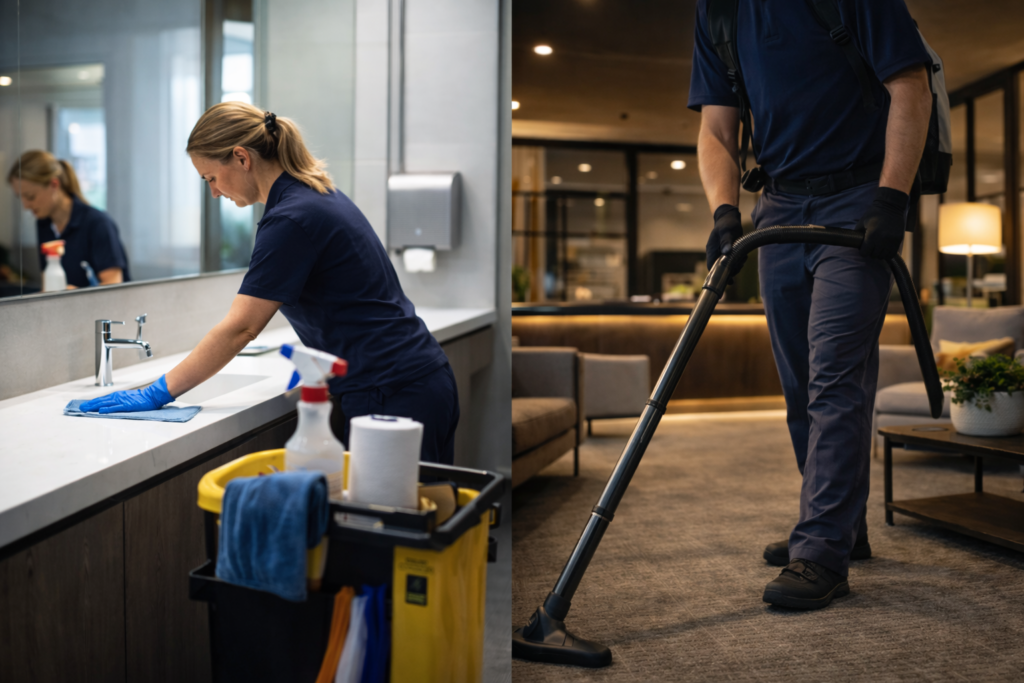
- Restroom checks, touch-ups, and restocking
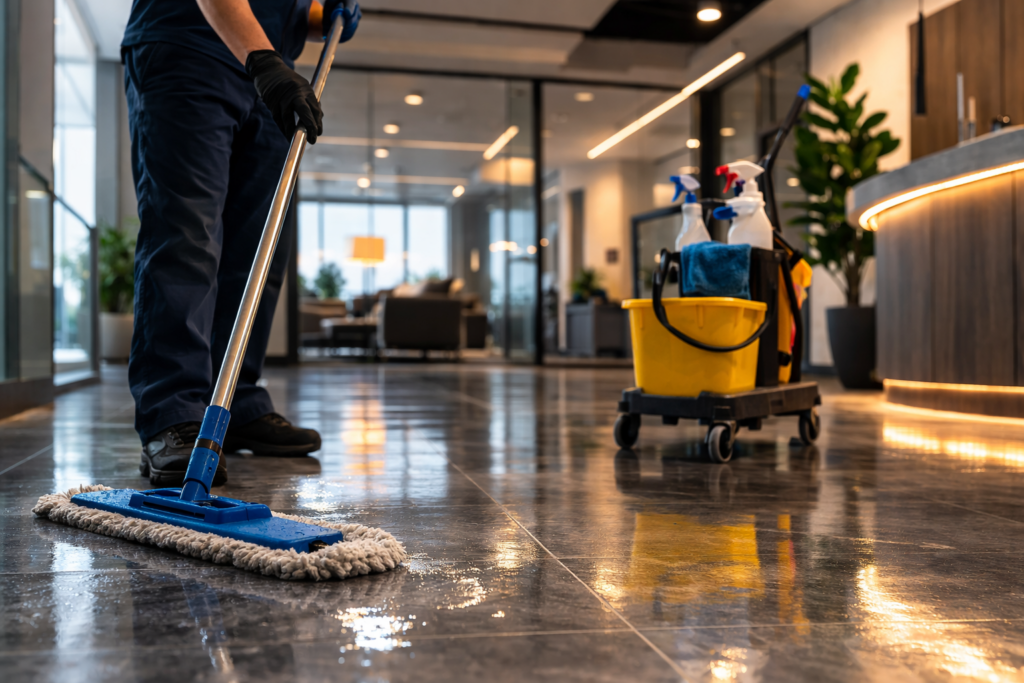
- Spot mopping and spill response (especially in entryways and hallways)
- Trash removal and liner changes in high-use areas
- Breakroom and kitchenette wipe-downs
- Lobby and reception presentation (floors, glass, fingerprints, seating areas)
- Cleaning and disinfecting high-touch points (handles, rails, switches)
- Keeping common areas tidy during busy periods
If your facility has customer traffic, frequent meetings, shared restrooms, or multiple shifts, a day porter can be the difference between “cleaned once” and “clean all day.”
What Are Nightly Janitorial Services?
Nightly janitorial services are what most businesses picture when they think “janitorial.” This is the after-hours cleaning that resets the building when staff and customers are gone, making it possible to do more thorough work without disrupting operations.
Typical nightly janitorial tasks
Nightly janitorial routines often include:
- Full restroom cleaning and sanitizing
- Vacuuming and mopping throughout the facility
- Trash removal across offices and common areas
- Breakroom cleaning (counters, sinks, tables, floors)
- Dusting and wiping common surfaces
- Disinfection of high-touch areas
- Spot cleaning glass and doors
- Closing checks to ensure the facility is ready for the morning
Nightly janitorial service is the foundation. Without it, daytime maintenance turns into constant catch-up. With it, daytime support becomes strategic.
Day Porter vs Nightly Janitorial: Which One Do You Actually Need?
Most businesses don’t need to choose one or the other. The real question is how to build coverage that matches your facility’s usage.
| Day porter | Nightly janitorial | |
|---|---|---|
| When the work happens | During business or peak operational hours, while the building is in use. | After hours, once staff and customers have gone. |
| Primary purpose | Maintains cleanliness as the facility is actively used — cleaning maintenance in motion. | A full reset of the building so it is ready for the morning. |
| Typical tasks | Restroom checks, touch-ups and restocking; spot mopping and spill response; trash removal and liner changes in high-use areas; breakroom and kitchenette wipe-downs; lobby and reception presentation; disinfecting high-touch points. | Full restroom cleaning and sanitizing; vacuuming and mopping throughout; trash removal across offices and common areas; breakroom cleaning; dusting and wiping common surfaces; disinfection of high-touch areas; spot cleaning glass and doors; closing checks. |
| Best fit when | Steady customer or patient traffic; restrooms used frequently through the day; a high-visibility lobby; multiple shifts or extended hours; entryways and traffic lanes that show dirt quickly. | Low to moderate foot traffic; restrooms used by a small staff rather than constant visitors; few public-facing areas; spills are rare during business hours; the building still looks presentable at midday. |
| Role in the plan | Strategic daytime support that prevents the midday decline. | The foundation. Without it, daytime work turns into constant catch-up. |
Here’s a practical way to decide.
Choose mostly nightly janitorial if…
Nightly cleaning may be enough if:
- Your facility has low to moderate foot traffic
- Restrooms are used by a small staff (not constant visitors)
- You don’t have many public-facing areas
- Spills and messes are rare during business hours
- The building still looks presentable at midday without extra effort
This often applies to smaller professional offices, low-traffic suites, and facilities with limited visitors.
Add a day porter if…
Daytime support usually becomes necessary when:
- You have steady customer or patient traffic
- Your restrooms are used frequently throughout the day
- Your lobby/reception area is high-visibility
- You have multiple shifts or extended hours
- Your floors show dirt quickly (entryways, traffic lanes, breakrooms)
- You’ve had complaints about midday restroom conditions or trash overflow
If your space is “fine in the morning” but declines during the day, a day porter isn’t a luxury—it’s coverage.
The “Midday Drop-Off” Problem (And Why It Happens)
The biggest misunderstanding about janitorial service is assuming one nighttime reset will last all day. For some facilities, that’s true. For many, it isn’t—especially in growing Central Texas cities where foot traffic is high and dust and debris are constant.
In places like Temple and Killeen, you often see more tracked-in dirt from parking lots and job sites. In Round Rock and Georgetown, heavier foot traffic in public-facing buildings can wear down cleanliness quickly. In Waco, facilities with mixed-use spaces (offices, public services, clinics) often see different mess levels across the same building.
The midday drop-off usually comes from:
- Restrooms being used more than the plan assumes
- Entryways collecting debris faster than nightly mopping can handle
- Trash filling up in high-use areas (breakrooms, lobbies, reception)
- Fingerprints and smudges building up on glass and doors
- Spills that aren’t addressed quickly becoming stains or slip hazards
A day porter addresses the drop-off before it becomes a problem.
A Practical Day Porter Cleaning Checklist
If you’re trying to visualize what a porter actually does, a day porter cleaning checklist helps clarify scope. Here’s a typical checklist that can be customized based on your facility:
High-traffic areas
- Sweep/spot mop entryways and traffic lanes
- Remove debris from vestibules and mats
- Wipe fingerprints from doors and glass as needed
- Tidy seating areas and wipe visible surfaces
Restrooms
- Check and restock supplies (paper, soap)
- Spot clean sinks, counters, and mirrors
- Remove trash and replace liners as needed
- Quick floor touch-ups (especially around sinks and stalls)
- Disinfect high-touch points (handles, dispensers)
Breakrooms and shared spaces
- Wipe counters and tables
- Spot clean spills in microwaves and sinks
- Replace liners and remove trash
- Keep floors presentable in food areas
Safety and response
- Respond quickly to spills
- Place wet floor signs when needed
- Report maintenance issues (leaks, overflowing fixtures, soap dispensers)
This checklist isn’t meant to replace nightly janitorial work. It’s meant to protect the building between resets.
Where Daytime Janitorial Services Make the Biggest Difference
Some industries simply have a higher “cleanliness visibility” requirement. If you’re in one of these categories, daytime janitorial services can protect brand perception and reduce complaints dramatically.
Medical and dental offices
Even if your clinical areas have their own protocols, the lobby, restrooms, and touchpoints shape patient confidence. A day porter helps keep those spaces consistently presentable, not just cleaned overnight.
Retail and customer-facing businesses
If customers see your floors and restrooms all day, you’re operating under real-time scrutiny. Quick touch-ups matter.
Banks and professional services
A clean lobby and restroom are part of trust. If your building looks neglected, customers notice—even if they don’t say anything.
Schools, training centers, and public facilities
Traffic is constant. Messes are unpredictable. Daytime support is often the only way to keep restrooms, hallways, and common areas from falling behind.
Building a Coverage Plan That Doesn’t Waste Money
Business owners often hesitate to add day porter coverage because they assume it means “someone on-site all day.” In reality, many facilities don’t need full-time porter support.
A smart plan aligns coverage to peak needs.
Common coverage options
- Part-time day porter (2–4 hours/day): Ideal for midday restroom refreshes and entryway touch-ups
- Split coverage (morning + lunch peak): Keeps the facility strong during the most visible hours
- Peak day coverage (Mon–Fri business hours): For high-traffic facilities where weekends are quieter
- Event-based porter support: Great for conferences, trainings, school events, or seasonal spikes
The goal is to cover the “mess window” that nightly cleaning can’t.
The Most Common Mistakes Businesses Make With Day Porter + Nightly Cleaning
1) Asking the night crew to “do porter work” during the day
Night crews aren’t scheduled to respond to real-time needs. Even if they’re great cleaners, the timing and expectations are different.
2) Treating the porter like a substitute for nightly janitorial
If you skip nightly resets, the porter spends the day fighting yesterday’s problems. The building never feels truly clean.
3) Not defining responsibilities clearly
A day porter needs a clear scope: what they check, how often, and what “done” looks like. Otherwise, it turns into vague expectations and inconsistent outcomes.
4) Overbuying coverage
Some facilities only need targeted daytime coverage. The right provider helps right-size the plan.
How to Decide the Right Mix for Your Business
If you’re evaluating day porter vs nightly janitorial, start with these questions:
- Do your restrooms still look and smell clean at midday?
- Do your entryways and lobbies stay presentable during peak hours?
- Are spills addressed quickly enough to prevent stains and slip risks?
- Does trash overflow in high-use areas before the day ends?
- Do you have public-facing traffic that makes cleanliness part of your brand?
If you answered “no” to any of these, you likely need either:
- More frequent nightly service, or
- Targeted day porter coverage, or
- A blended plan that covers both
For many Central Texas businesses, the blended plan is the most efficient because it prevents the repeated “catch-up cleaning” cycle.
Why Local Conditions Matter in Temple, Belton, Killeen, Round Rock, Georgetown, and Waco
Local realities shape how fast a building looks dirty. Central Texas often deals with:
- Dust and debris tracked in from parking lots and nearby construction
- Seasonal pollen that settles on floors and surfaces
- Weather swings that bring moisture and grime into entryways
- High growth and high traffic in commercial corridors
That’s why the same cleaning schedule that works in one facility can fail in another—even if they’re similar in size. A plan needs to match your traffic patterns and your building’s “mess points,” not just a generic square footage estimate.
Centex Office Pros approach cleaning like a coverage plan: where the mess shows up, when it shows up, and how to keep the facility consistent throughout operating hours.
Conclusion
Choosing day porter vs nightly janitorial isn’t about picking a single service—it’s about building a cleaning plan that matches how your business runs. Nightly janitorial services provide the foundational reset that keeps restrooms, floors, and common areas sanitary and ready for the next day. Day porter services protect the building during business hours with real-time upkeep, spill response, and restroom refreshes so your facility stays clean when people are actually in it. For businesses in Temple, Belton, Killeen, Round Rock, Georgetown, and Waco, the right mix often comes down to traffic, visibility, and how quickly your building declines after opening.
If you want help mapping a practical plan—whether that’s a targeted porter schedule, stronger nightly coverage, or a blended approach—Centex Office Pros can walk your facility and recommend a straightforward scope that fits your operations. Reach out to learn more or request a quote based on your building’s real needs.